THE CREDIT COMEBACK SERIES
How to Rebuild Your Credit After Chapter 7 Bankruptcy
Your Credit Score is Not a Life Sentence.
You filed for bankruptcy because you had no other choice. Now the process is over — but nobody handed you a roadmap for what comes next.Your credit report is a mess. You don't know which accounts to dispute, which bureaus to check, or where to even start rebuilding. You just know that the number on your credit report doesn't define who you are.You're right. It doesn't. And there is a clear path forward.


DOES THIS SOUND FAMILIAR?
Before the bankruptcy it was the bills, the judgments, the specter of foreclosure keeping you up at night. So you did the hard thing. You filed.But now a whole new set of fears moved in. What if your friends find out? Will you ever have good credit again? Will you ever own a home?Those fears are lying to you. And this book is going to prove it.
Meet Your Roadmap
Battle Back from Bankruptcy is the plain-English guide to rebuilding your credit after discharge — written by someone who has been on both sides of the table.
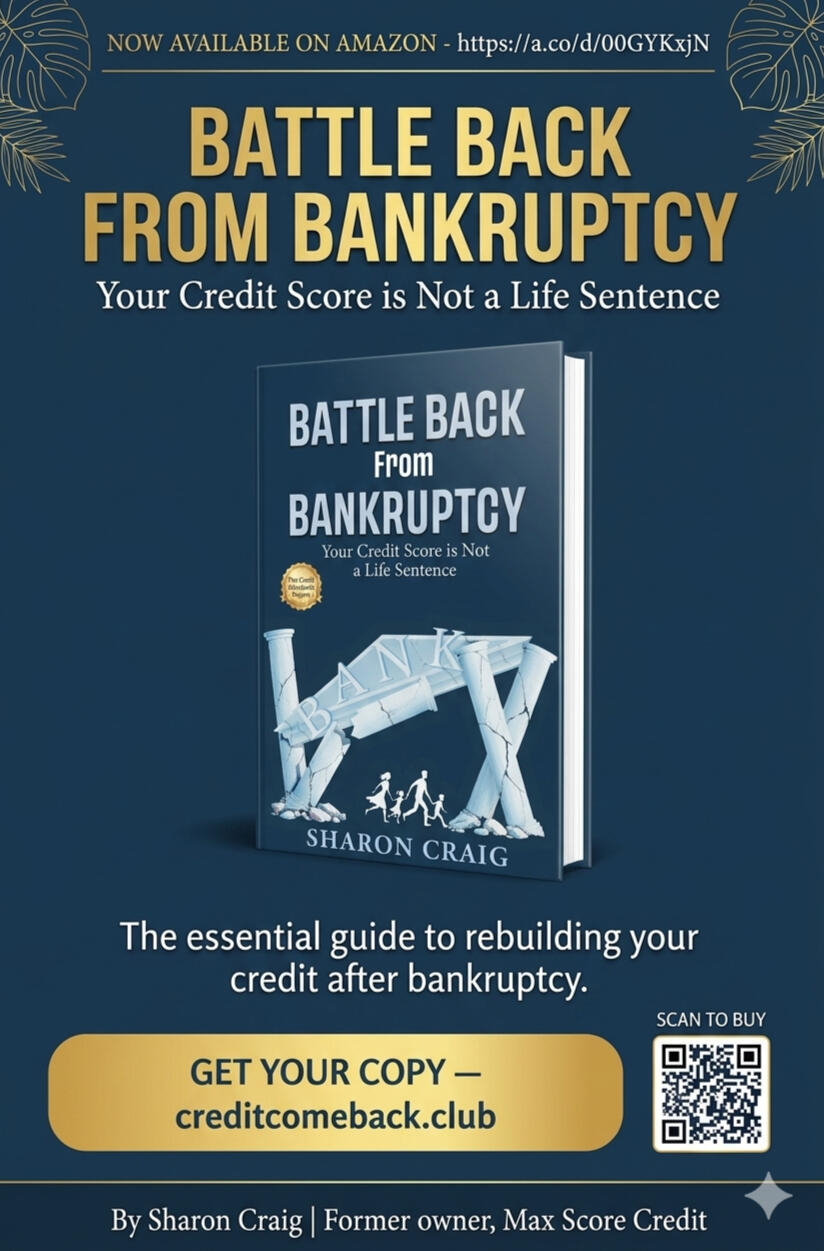
Track Your Score Across All Three Bureaus, Free
FREE
An organizer to track your credit score for ALL THREE BUREAUS!
Enter your email address and receive a FREE downloadable organizer that helps you track your credit score progress. Where you start, what your current score is and most importantly where your score is next month, six months from now and next year. See your progress. Celebrate your success. I can't wait to get your feedback.
BLOG POSTS
Jump to an article:
How to Qualify to Rent an Apartment or House After Bankruptcy
How to Rebuild Your Credit After Chapter 7 Bankruptcy: A Month-by-Month Plan
How to Use AI to Supercharge Your Credit Score and Avoid Low Credit Score Pitfalls
If you just received your bankruptcy discharge and you need housing, the first question most people ask is: will any landlord rent to me?The answer is yes — but you need to know how to approach it.Large apartment complexes run automated screening that often auto-rejects anyone with a bankruptcy on their record. Skip them entirely for now. Instead, focus on private landlords — individuals who own one to four units. They make decisions personally, not by algorithm, and many will rent to you if you come prepared.What prepared looks like: bring your discharge paperwork, three months of bank statements showing steady income, and a reference letter if you have one. Lead with transparency. A landlord who hears your story directly from you is far more likely to say yes than one who discovers it on a background check.A script that works: "I did file for bankruptcy due to circumstances that have since changed. The debt has been discharged. Since then I have maintained steady income and I am committed to being a reliable tenant. I can provide documentation of all of this."Your timeline for re-entering the rental market improves steadily. Private landlords are accessible almost immediately after discharge. Mid-size properties open up at 12 to 18 months. The broader market is largely accessible again within three years — especially if you have been actively rebuilding your credit in the meantime.
...a bit about Sharon Craig
Sharon Craig is the former owner of Max Score Credit, a credit restoration company based in Maryland. Drawing on years of hands-on experience helping people navigate bankruptcy, collections, and financial hardship, she now writes and teaches about credit rebuilding strategies through the Credit Comeback Series. She is especially interested in seeing nonprofits and business owners get the financing they need. Battle Back from Bankruptcy is Book 1 in The Credit Comeback Series.

COMING SOON
Book 2 in the
Credit Comeback series
Build Credit Confidence
watch for it on Amazon!
How to Qualify to Rent an Apartment or House After Bankruptcy
By Sharon Craig, author Battle Back from Bankruptcy
(available on Amazon)
Published May 1, 2026
You filed for bankruptcy. The debt is gone — or at least manageable now. But you need a place to live, and you are terrified that the moment a landlord runs your credit, the door slams shut.
Here is the truth: you can rent an apartment or house after bankruptcy. It is harder than it used to be, but thousands of people do it every month. This guide tells you exactly what landlords look for, what you can do to strengthen your application, and what to say when they ask about your bankruptcy.What Landlords Actually Check
Most landlords run a standard background and credit check. When they see a bankruptcy, their first instinct is concern — but experienced landlords know that a bankruptcy actually means your debt was legally resolved. What they are really evaluating is:
Your rental payment history — did you ever miss rent specifically?
Your current income — can you afford this rent right now?
Your behavior since the bankruptcy — are you rebuilding responsibly?
Your references — do people vouch for you as a tenant?
None of these are automatic disqualifiers. All of them are things you can influence before you ever apply.Step 1: Know What Is on Your Credit Report Before They Do
Pull your free reports from all three bureaus at AnnualCreditReport.com before applying anywhere. Look for:
Any accounts that should show as discharged but still show as active balances
Incorrect personal information (old addresses, misspelled name)
Any accounts opened after your bankruptcy — these should show positive payment history
Dispute errors in writing before you start apartment hunting. A cleaner report gives you more credibility and fewer awkward questions.Step 2: Build a Renter's Resume
A renter's resume is a one-page document you bring to every showing. It proactively addresses your bankruptcy and shows landlords that you are organized, transparent, and serious. Include:
A brief explanation of why you filed bankruptcy (job loss, medical bills, divorce — keep it factual and brief)
Proof that the bankruptcy is discharged
Your current income and employer information
Three to five references from previous landlords, employers, or community figures
Proof of any positive accounts you have opened since filing (secured card, credit builder loan)
Most landlords have never seen a renter's resume. Standing out as prepared and honest puts you ahead of other applicants who may have better credit but less presentation.Step 3: Offer to Strengthen Your Application
If your credit score is still low, you have several options to make your application more competitive:
Larger security deposit: Offer two months instead of one. Many landlords will accept this in exchange for overlooking a credit issue.
Co-signer: A trusted friend or family member with good credit can co-sign your lease. This transfers some of the landlord's risk.
Prepay rent: Some landlords will accept first, last, and two months' security. It is a bigger upfront cost but removes their hesitation.
Proof of income ratio: Show that your monthly income is at least three times the rent. This is the most reassuring number a landlord can see.Step 4: Target the Right Landlords
Not every landlord treats bankruptcy the same way. Corporate apartment complexes often use automated screening systems that flag bankruptcy automatically. Private landlords — individuals who own one to four units — tend to make decisions based on the full picture of who you are.
Start your search with:
Private landlords on Facebook Marketplace and Craigslist
Smaller property management companies (fewer than 50 units)
Rent-to-own opportunities — these are structured differently and often more flexible
Employer housing assistance programs if your company offers themWhat to Say When They Ask About the Bankruptcy
Be honest, be brief, and be forward-looking. A script that works:
"I did file for bankruptcy [X years ago] due to [brief reason]. It was the right decision financially, and the debt has been discharged. Since then I have [opened a secured credit card / been making on-time payments / maintained steady employment]. I can provide documentation of all of this. I am a reliable tenant and I want you to feel confident in renting to me."Landlords respond to confidence and transparency. Avoid being defensive or over-explaining. State the facts, show the evidence, and move forward.The Timeline: What to Expect
Your ability to rent improves steadily over time after bankruptcy. Here is a realistic picture:
Immediately after discharge: Private landlords, larger deposits, co-signers needed
6 to 12 months post-discharge: More options open as you build positive payment history
1 to 2 years post-discharge: Most private and mid-size landlords will consider you with good income proof
3+ years post-discharge: Standard rental market mostly accessible again
The fastest way to move through this timeline is to actively build positive credit history right now — secured cards, credit builder loans, on-time payments on everything.
How to Rebuild Your Credit After Chapter 7 Bankruptcy: A Month-by-Month Plan
By Sharon Craig; author Battle Back from Bankruptcy (available on Amazon)
Published May 15, 2026
Your Chapter 7 discharge is official. The debt is gone. And now you are staring at a credit report that feels like a crime scene — and wondering if you will ever have a normal financial life again.
The answer is yes. And it happens faster than most people think — if you follow a deliberate plan instead of just waiting for time to heal things on its own.
Here is a realistic, month-by-month roadmap for the first year after discharge.What Happens to Your Credit Score at Discharge
Here is the paradox that surprises most filers: for people who were already deep in delinquency, the score sometimes goes up slightly after discharge. That is because the accounts are now marked as discharged rather than delinquent — which is technically a more resolved status.
For people with higher pre-bankruptcy scores, the drop is steeper — sometimes 200 points or more. Either way, the Chapter 7 notation stays on your report for 10 years. But its impact on your actual score diminishes significantly after two to three years of positive behavior.
The clock starts now. Every month you wait is a month you are not building.Month 1 to 2: Clean the Foundation
Pull all three credit reports from AnnualCreditReport.com
Verify that every discharged account is marked correctly — it should say "discharged in bankruptcy," not "charge-off" or "unpaid"
Dispute any accounts showing incorrect balances or statuses in writing to each bureau
Confirm your personal information is accurate on all three reports
This step is critical and most people skip it. Incorrect reporting after bankruptcy is extremely common and can suppress your score by an additional 20 to 50 points. Fix the foundation first.Month 2 to 3: Open Your First Positive Account
You need to start feeding the credit bureaus positive data as soon as possible. The two best options immediately after Chapter 7:
Secured credit card: You deposit $200 to $500 as collateral and it becomes your credit limit. The card reports to all three bureaus monthly. Use it for one small recurring charge (a streaming subscription) and pay it off in full each month. This builds payment history immediately.
Credit builder loan: Offered by many credit unions and online lenders. You make small monthly payments, and the money is held in an account until the loan is paid off. It builds both payment history and credit mix simultaneously.
Do not open both at once. Start with the secured card. Add the credit builder loan three to six months later once the card account has aged a little.Month 3 to 6: Build the Habits That Build the Score
Your score during this period is almost entirely determined by one thing: whether you pay every account on time, every single month. No exceptions.
Set up autopay for the minimum payment on every account so you never miss a due date
Keep your secured card balance below 10% of your limit whenever possible (not just below 30%)
Do not apply for any new credit during this period — let your existing accounts age
Consider signing up for Experian Boost to get credit for on-time utility and phone bill payments
By month six, most people who follow these habits are seeing their scores move into the 580 to 620 range — which opens up more credit options.Month 6 to 9: Expand Your Credit Profile
Once your secured card has six months of perfect payment history, you have options:
Apply for a second secured card with a different bureau (diversifies reporting)
Add the credit builder loan if you have not already
Ask your secured card issuer if you qualify for an upgrade to an unsecured card (some issuers do this automatically at the 12-month mark)
The goal is to have two to three accounts reporting positive payment history by the end of month nine. Each new positive tradeline accelerates the recovery.Month 9 to 12: Measure, Adjust, and Plan Ahead
By month twelve, most people who followed this plan have scores in the 600 to 650 range. Some are higher. Here is what to do:
Pull a full credit report and compare it to your month-one baseline — document your progress
Calculate your credit utilization across all accounts and pay down balances if above 20%
Research FHA mortgage eligibility — you may be closer than you think (FHA allows applications as soon as two years after Chapter 7 discharge)
Consider becoming an authorized user on a trusted family member's old, low-utilization card — this can add significant history to your file instantlyThe Score Milestones That Change Your Life
Here is why every point matters and what each threshold unlocks:
580 — Minimum for FHA mortgage pre-qualification
620 — Most conventional lenders begin considering you
640 — Auto loan rates start dropping significantly
680 — Most credit cards become accessible again
700 — Prime borrower territory. Most doors reopen.
740+ — Best available rates on mortgages, auto loans, and cardsFrom discharge to 700 is achievable in three to four years for people who follow a consistent plan. Without a plan, the same journey takes seven to ten years — and some people never get there.Some sources cite 12 to 24 months as the timeline to reach 700. That figure is possible under ideal conditions — perfect execution, no setbacks, available capital from day one. In my experience working with real people in real financial situations, three to four years is the honest number. I would rather give you a timeline you can actually hit than one that makes you feel like you failed.
How to Use AI to Supercharge Your Credit Score and Avoid Low Credit Score Pitfalls
By Sharon Craig, author of Battle Back from Bankruptcy (available now on Amazon)
Published May 29, 2026
Artificial intelligence is reshaping everything from how you shop to how doctors diagnose disease. But here is something most people have not figured out yet: AI is also one of the most powerful tools available for repairing and building your credit score — if you know how to use it correctly.
This is not about gimmicks or credit repair scams repackaged with a tech veneer. This is about using real, available AI tools to do things smarter, faster, and more strategically than any credit repair agency charges you thousands to do.First, Understand How Your Credit Score Actually Works
Before AI can help you, you need to know what it is optimizing. Your FICO score is calculated from five weighted factors:
Payment history — 35% of your score
Credit utilization — 30% of your score
Length of credit history — 15% of your score
Credit mix — 10% of your score
New credit inquiries — 10% of your score
Most people focus only on payment history. But AI can help you optimize all five — simultaneously.5 Ways to Use AI for Your Credit Score Right Now
1. Use AI to Analyze Your Credit Report for Errors
Credit reports contain errors more often than most people realize. The Federal Trade Commission has found that a significant percentage of consumers have at least one error on their report that could affect their score.
Here is how to use AI to find them faster:
Download your credit reports from AnnualCreditReport.com (all three bureaus)
Copy the text from each report
Paste it into ChatGPT or Claude with this prompt: "Analyze this credit report for any potential errors, inconsistencies, duplicate accounts, incorrect balances, or items that appear past the statute of limitations for reporting."
Review the AI's findings and flag any items it identifies
AI can scan hundreds of data points in seconds and spot patterns a human eye misses — like an account appearing twice, or a debt that is legally too old to appear on your report.2. Use AI to Write Better Dispute Letters
A poorly written dispute letter gets ignored or gets a rubber-stamp "verified" response. A well-written one — citing specific regulations, specific inaccuracies, and requesting specific remedies — is far more effective.
Use this prompt in any AI tool:
Prompt: "Write a formal credit dispute letter to [Experian / Equifax / TransUnion] disputing the following item: [describe the account, the error, and why it is inaccurate]. Reference the Fair Credit Reporting Act section 611. Request that the item be deleted or corrected within 30 days. Keep it professional and firm."AI generates a legally grounded, professional letter in under 30 seconds. You review it, personalize it, and send it certified mail. This is the same process credit repair companies charge $100+ per letter to do for you.3. Use AI to Model Your Credit Score Before You Make Moves
This is where AI gets genuinely powerful. Before you open a new card, close an old one, take out a loan, or pay off a collection, you can ask AI to model the likely impact on your score.
Example prompt:
Prompt: "My current credit score is approximately 580. I have two credit cards with total balances of $4,200 out of $6,000 in available credit. I am considering paying down $2,000 on one card. Based on FICO scoring factors, how should I allocate that $2,000 payment to maximize my credit score improvement?"AI understands the math of credit scoring and can give you a strategic paydown plan that generic advice cannot — because it accounts for your specific numbers.4. Use AI to Set Up Automated Credit Monitoring Habits
One of the biggest credit pitfalls is not catching problems early. AI-powered tools can help you build a consistent monitoring habit:
Set a monthly calendar reminder and ask AI: "What should I check on my credit report this month and what should I be watching for?"
Use AI to interpret alerts from free services like Credit Karma or Experian — paste the alert and ask what it means and what action to take
Ask AI to create a personal credit improvement checklist tailored to your specific score range and goals5. Use AI to Avoid the Most Common Credit Pitfalls
Here are the pitfalls AI can help you sidestep:
Pitfall 1 — Closing old accounts: This shortens your credit history and reduces available credit. Ask AI before you close anything.
Pitfall 2 — Applying for too much credit at once: Multiple hard inquiries in a short window tank your score. AI can help you sequence applications strategically.
Pitfall 3 — Paying off collections without a strategy: Simply paying does not always improve your score. AI can walk you through pay-for-delete negotiation tactics first.
Pitfall 4 — Ignoring credit mix: Having only credit cards hurts your mix score. Ask AI what type of account would help your specific profile most.What AI Cannot Do
To be clear: AI is a tool, not a magic wand. It cannot remove accurate negative information from your credit report. It cannot guarantee score increases. And it cannot replace the consistent, month-over-month positive behavior that is the real engine of credit building.
What AI does is make you smarter, faster, and more strategic about every decision you make — which compresses the timeline and helps you avoid the costly mistakes that set people back by months or years.
Last updated September 2026